
MakersOfCode

March 2026

Software Development

The Art Of Clean Code: Why Writing Code is Like Writing a Story

Why Writing Code is Like Writing a Story—and How to Do It Well In the world of software development, “clean code” is more than just a buzzword. It’s a mindset, a craft, and an essential skill that separates average developers from great ones. Writing clean code is about creating software that is easy to understand, simple to maintain, and a pleasure for others (and your future self) to read. Just as writers care about how their sentences flow and resonate with readers, developers should care about how their code communicates. Code is read far more often than it’s written. So, let’s explore what makes code clean—and how you can master the art. What is Clean Code? Robert C. Martin, in his book Clean Code, said: “Clean code always looks like it was written by someone who cares.” Principles of Clean Code 1. Meaningful Naming Avoid vague or cryptic names. A variable named d is a mystery; a variable named deadlineDate tells a story. 2. Functions Should Be Small and Do One Thing The longer and more complex a function, the harder it is to debug or reuse. Break logic down into modular, focused pieces. 3. Avoid Comments—Write Self-Explanatory Code While comments are helpful, the best code doesn’t need many. If the code is clear, the comment becomes redundant. 4. Consistent Formatting Whether it’s tabs vs. spaces or bracket placement—pick a style and stick to it. Use linters or formatting tools like Prettier or Black to automate this. 5. DRY (Don’t Repeat Yourself) Duplication is a sign of poor structure. Repeated code means repeated bugs and repeated fixes. Why Clean Code Matters Clean Code Is a Habit Writing clean code isn’t something you do once; it’s something you cultivate over time. Here are a few practices to help you build that habit: Conclusion Clean code is not just for perfectionists—it’s for professionals. It’s about respect: for your teammates, your users, and your future self. Whether you’re building a startup MVP or contributing to enterprise software, the art of clean code will elevate your craft, reduce stress, and make your software resilient and elegant. So next time you write a line of code, ask yourself: “Will this make sense six months from now?”

Software Development

Optimizing Database Performance: Best Practices for Speed & Scalability

In today’s data-driven applications, your database isn’t just a backend component—it’s the beating heart of performance. A slow database slows everything down. Here’s how to keep it fast, efficient, and scalable. Why Database Performance Matters Whether you’re running an e-commerce site, SaaS app, or mobile platform, database performance affects: 1. Optimize Your Queries Bad queries are the #1 reason for poor performance. Use these techniques to improve them: 2. Index Strategically Indexes are essential—but too many can hurt performance. Use them wisely: 3. Normalize and Then Denormalize (If Needed) Start with a normalized schema to reduce redundancy. But if you’re doing too many JOINs for simple queries, consider selective denormalization. Pro Tip: Materialized views or caching computed values can reduce expensive calculations on every request. 4. Use Connection Pooling Opening and closing database connections is expensive. Tools like PgBouncer (PostgreSQL) or ProxySQL (MySQL) maintain persistent pools that dramatically reduce overhead. 5. Cache Results Don’t hit the database every time. Use: 6. Archive Old Data Large tables are slow to scan and index. Move inactive records (like old logs or historical orders) into archive tables. This reduces the load on hot data. 7. Monitor and Benchmark Regularly You can’t improve what you don’t measure. Use tools like: 8. Choose the Right Storage Engine MySQL offers different engines: InnoDB (ACID-compliant, row-level locking) is often best for transactions, while MyISAM may be faster for read-heavy workloads. Choose what fits your use case. 9. Partition Large Tables Partitioning breaks massive tables into smaller chunks for faster reads. Useful when dealing with time-series data, logs, or very large datasets. 10. Use Read Replicas For read-heavy applications, replicate your database to distribute the load. Write to a master, read from replicas. Conclusion Database optimization is not a one-time task—it’s an ongoing process of monitoring, measuring, and refining. By writing efficient queries, indexing intelligently, caching smartly, and scaling infrastructure as needed, you’ll ensure your applications remain fast, scalable, and cost-effective. Remember: the fastest database query is the one you never have to run. Bonus Tip: Document your database schema and indexing strategy. Future developers (and you) will thank you.

Emerging Technologies

The Rise of Low Code & No Code development

How visual development platforms are reshaping the way software is built—and who builds it. Introduction In a world where digital transformation is no longer optional, businesses are under constant pressure to build apps faster and smarter. Enter low-code and no-code development platforms—tools that empower users to create applications with little to no traditional programming knowledge. This movement is revolutionizing software development by democratizing access, speeding up delivery, and allowing teams to focus on solving business problems rather than writing boilerplate code. But it also raises important questions about scalability, security, and the future role of developers. What is Low-Code/No-Code? Why It’s Gaining Popularity The rise of these platforms is being driven by several key factors: Popular Low-Code and No-Code Platforms Use Cases Low-code and no-code platforms are ideal for: Advantages Challenges and Limitations The Future of Development? Low-code and no-code platforms are not here to replace traditional developers—but to enhance and expand what’s possible. Developers can use them to quickly prototype ideas, automate repetitive tasks, or work alongside business users to co-create solutions. In the coming years, we’re likely to see more hybrid teams, where developers, designers, and non-tech users collaborate using visual platforms and custom code together. As AI continues to integrate with these tools, expect even more intelligent automation, code generation, and real-time optimization. Conclusion The rise of low-code and no-code development represents a fundamental shift in how software is conceived, built, and maintained. It’s breaking down the barriers between idea and execution—and enabling more people than ever to bring digital products to life. Whether you’re a founder with no coding experience or a senior developer looking to speed up delivery, low-code and no-code platforms are powerful tools worth exploring. Final Thought: In the new era of software, coding is a skill—but building is a mindset.

Emerging Technologies, Software Development

The Ethical Implications of AI in Software Development

As artificial intelligence becomes deeply embedded in software development, it raises crucial questions not just about what we can build—but what we should build. Introduction AI is transforming how software is developed, deployed, and experienced. From AI-assisted coding tools to automated testing, recommendation engines, and predictive analytics, intelligent systems are reshaping the developer’s workflow. But with great power comes great responsibility. Behind every AI-driven decision lies a series of ethical questions: Is it fair? Is it transparent? Is it safe? In this blog, we’ll explore the ethical implications of AI in software development—and why addressing them isn’t optional. 1. Algorithmic Bias and Discrimination AI systems learn from data. If that data is biased, incomplete, or unbalanced, the results can be discriminatory. “Bias in, bias out” is not just a technical problem—it’s an ethical one. 2. Transparency and Explainability Many AI systems operate as black boxes—producing results without explaining how or why. This raises questions of trust and accountability. Ethical AI demands transparency—especially in areas like finance, healthcare, or law where decisions carry real consequences. 3. Job Displacement and Developer Roles AI tools like GitHub Copilot, Amazon CodeWhisperer, and ChatGPT are redefining how software is written. While they boost productivity, they also prompt concerns: The ethical path forward lies in using AI as an augmentation—not a replacement—of human talent, while retraining workers for new roles created by AI itself. 4. Intellectual Property and Code Generation AI-powered tools trained on open-source codebases sometimes generate snippets that mirror licensed code. This raises IP and copyright concerns. These are evolving legal and moral discussions that developers and companies must navigate responsibly. 5. Data Privacy and User Consent Many AI systems depend on collecting, storing, and analyzing user data. Without robust privacy protections, this leads to surveillance risks and misuse. Ethical AI respects user consent and designs privacy as a feature—not an afterthought. 6. Autonomous Decision-Making and Accountability As AI becomes capable of making decisions independently—such as approving loans, flagging content, or allocating resources—the question arises: Who is accountable when things go wrong? Ethical software development must include human-in-the-loop controls and clear escalation paths for automated systems. 7. AI in Security and Surveillance AI is increasingly used for threat detection, facial recognition, and behavioral monitoring. While powerful, these tools can infringe on civil liberties when misused. Developers and organizations must draw ethical boundaries around use cases and challenge projects that violate fundamental rights. The Developer’s Role in Ethical AI AI ethics isn’t just a concern for policymakers or ethicists. Developers are on the front lines of innovation, and their choices shape how AI behaves. Here’s how they can contribute ethically: Conclusion AI in software development offers incredible promise—but also complex risks. Ethical awareness is no longer optional. It’s a professional obligation. As developers, we must ask hard questions, challenge assumptions, and design systems that are not just intelligent, but also just. Because in the age of AI, code doesn’t just execute—it impacts lives.
Cloud & DevOps

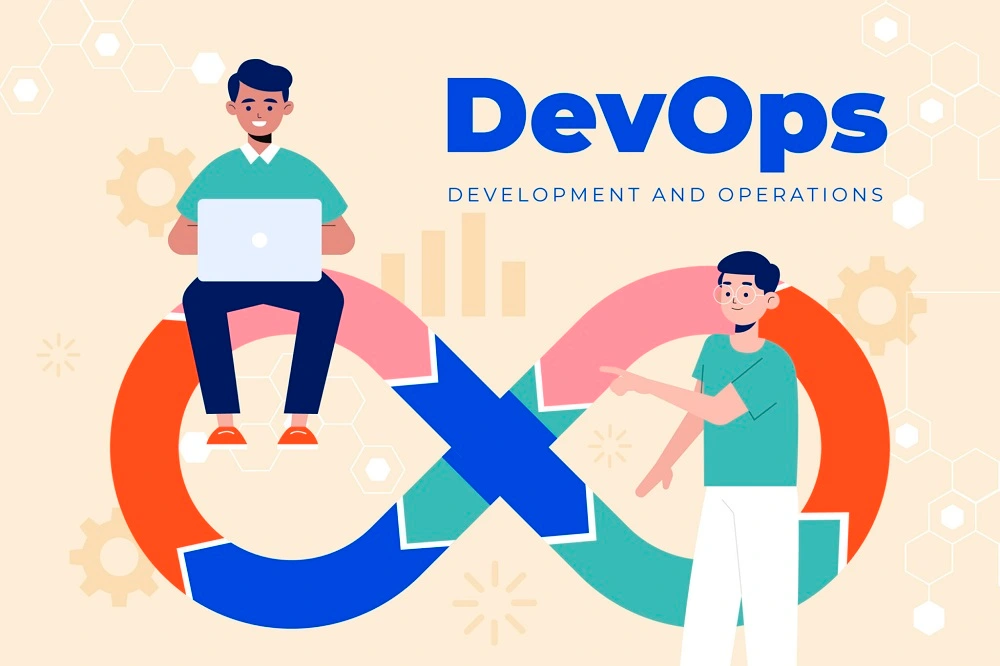
Embracing DevOps for Faster Time-to-Market

Discover how adopting DevOps can accelerate software delivery, improve quality, and align teams toward a shared business goal: shipping faster without breaking things. Introduction In today’s hyper-competitive digital landscape, speed is everything. Companies that release features faster, respond to user feedback quicker, and adapt to change efficiently often dominate their markets. This is where DevOps comes in. DevOps is more than just a buzzword. It’s a cultural and technical movement that bridges the gap between software development and IT operations—empowering teams to build, test, and release software with unprecedented speed and stability. What Is DevOps? DevOps is a set of practices that combines software development (Dev) and IT operations (Ops). It aims to shorten the development lifecycle while delivering features, fixes, and updates frequently and reliably. Key principles of DevOps include: Why DevOps Matters for Time-to-Market Here’s how embracing DevOps accelerates delivery: 1. Continuous Integration and Delivery CI/CD pipelines automate the process of integrating code changes and deploying them to production. This removes bottlenecks caused by manual testing and release processes. Result: Developers can deploy code multiple times a day instead of once every few weeks. 2. Infrastructure as Code (IaC) DevOps teams treat infrastructure (servers, databases, networks) the same way they treat code—versioned, automated, and reproducible. Result: Environments can be spun up or down in minutes, enabling faster testing and deployment. 3. Improved Collaboration DevOps fosters a shared responsibility model, reducing the “throw-it-over-the-wall” mentality between developers and operations. Result: Faster feedback loops, fewer bugs in production, and quicker resolution of issues. 4. Automated Testing and Quality Assurance Automated unit, integration, and UI tests ensure code is production-ready before it’s deployed. Result: Reduces regression issues and time spent in manual QA cycles. 5. Real-Time Monitoring and Feedback DevOps encourages proactive monitoring of systems, enabling teams to detect and fix problems before users notice. Result: Faster issue resolution and higher confidence in frequent deployments. DevOps in Action: Real-World Impact Challenges to Watch For Adopting DevOps isn’t without its hurdles: Success requires executive buy-in, team-wide education, and incremental process improvement—not just tool adoption. Getting Started with DevOps If you’re new to DevOps, here’s how to begin: Conclusion DevOps isn’t a silver bullet—but when done right, it can dramatically reduce your time-to-market while increasing product quality and team morale. Whether you’re a startup looking to move fast or an enterprise seeking to stay competitive, embracing DevOps practices can give you the edge you need. Speed doesn’t have to sacrifice stability. With DevOps, you can have both.

Cloud & DevOps

Navigating the Cybersecurity Landscape

As digital transformation accelerates, so do cyber threats. Learn how to navigate today’s complex cybersecurity terrain to protect your business, data, and users. Introduction From startups to Fortune 500 companies, no organization is immune to cyberattacks. With threats evolving daily—from ransomware and phishing to zero-day exploits—navigating the cybersecurity landscape has become a critical business skill, not just an IT concern. In this blog, we’ll explore today’s cybersecurity challenges, key concepts, best practices, and how businesses can build resilient systems to thrive in an increasingly hostile digital world. 1. The New Threat Landscape Modern cyber threats are more sophisticated, targeted, and financially motivated than ever before. Here are some of the most common attack types: 2. Key Concepts in Cybersecurity To understand how to defend against threats, it’s important to know the pillars of cybersecurity: 3. Building a Cybersecurity Strategy A strong cybersecurity strategy isn’t just about firewalls and antivirus—it’s about layered defense and proactive thinking: Defense in Depth Use multiple layers of security controls across endpoints, networks, and data layers. If one layer fails, others stand in the way of compromise. Risk Assessment Identify what data is most valuable and where you’re most vulnerable. Prioritize defenses accordingly. Least Privilege Access Users and systems should only have the access they absolutely need—nothing more. This minimizes damage if credentials are stolen. Employee Training Most breaches begin with human error. Regular security awareness training is one of the best lines of defense. 4. Tools of the Trade There are countless tools, but here are some foundational categories every organization should consider: 5. Cloud Security Considerations With more workloads moving to the cloud, security must adapt. Key principles include: 6. Incident Response: Be Prepared Even the best defenses can be breached. Having a response plan is crucial: 7. The Future of Cybersecurity As threats evolve, so must defenses. Trends shaping the future include: Conclusion Navigating the cybersecurity landscape is not a one-time event—it’s a continuous journey of adaptation, awareness, and resilience. As digital threats become more advanced, organizations must proactively invest in cybersecurity as a core business priority—not just an IT expense. Security isn’t just about protecting systems—it’s about protecting trust.

Emerging Technologies

Blockchain Beyond Cryptocurrencies

Often associated with Bitcoin, blockchain is far more than just digital money. From supply chains to voting systems, discover how this transformative technology is reshaping the digital world. Introduction When most people hear the word “blockchain,” they immediately think of cryptocurrencies like Bitcoin and Ethereum. But blockchain technology has evolved far beyond its crypto origins. It’s now being adopted across industries as a decentralized, secure, and transparent way to record and share data. This blog explores how blockchain is impacting sectors like healthcare, finance, logistics, real estate, and beyond—changing the way we think about trust, transparency, and collaboration. What Is Blockchain? Blockchain is a decentralized digital ledger that records transactions across multiple computers so that the record cannot be altered retroactively. Each “block” contains data, a timestamp, and a cryptographic link to the previous block—forming a “chain.” Key characteristics: 1. Supply Chain Transparency Blockchain brings real-time visibility into supply chains by tracking every step of a product’s journey—from raw material to finished good. 2. Healthcare and Medical Records Patient data is often fragmented across providers. Blockchain can unify and secure this data with patient-controlled access. 3. Digital Identity Verification Blockchain enables secure, self-sovereign digital identities—users control their personal data instead of relying on centralized providers. 4. Real Estate and Land Registry Property transactions are slow, paperwork-heavy, and prone to fraud. Blockchain can simplify ownership transfers and title verification. 5. Voting and Democratic Systems Blockchain-based voting could offer tamper-proof digital ballots that are secure and verifiable. 6. Intellectual Property and Digital Rights Blockchain can be used to timestamp creative works, verify ownership, and automate royalty payments via smart contracts. 7. Cross-Border Payments and Remittances Even beyond cryptocurrency speculation, blockchain enables fast, low-cost global money transfers without intermediaries. Challenges and Considerations Despite its promise, blockchain adoption faces hurdles: The Future of Blockchain As blockchain platforms mature, their use will expand far beyond finance. Technologies like smart contracts, decentralized autonomous organizations (DAOs), and tokenization will continue to disrupt traditional models of trust and collaboration. Blockchain won’t replace all databases—but where transparency, security, and decentralization are critical, it can be a game-changer. Conclusion Blockchain is not just the backbone of cryptocurrencies—it’s a foundational technology poised to reshape industries. From tracking supply chains and securing identities to streamlining voting and real estate, its impact is just beginning. The challenge now is not whether blockchain can go beyond crypto—it’s how fast industries can adapt and innovate with it.

Cloud & DevOps

Demystifying Server less Architecture

Serverless computing isn’t magic—it’s just smart engineering. Let’s break down what it really means, how it works, and when to use it. Introduction “Serverless” sounds like a world without servers, but that’s not quite true. Servers still exist—they’re just abstracted away from the developer. With serverless architecture, developers can focus entirely on writing code without managing the underlying infrastructure. This blog explores what serverless really is, its pros and cons, key use cases, and how it’s reshaping modern software development. What Is Serverless Architecture? Serverless architecture is a cloud computing execution model where the cloud provider dynamically manages the allocation and provisioning of servers. Developers write functions or services, and the platform handles everything else—scaling, uptime, and infrastructure. Common serverless platforms include: Key Characteristics Serverless vs Traditional Architecture Traditional Serverless Always-on servers Runs only when triggered Manual scaling Auto-scaling on demand Upfront provisioning No provisioning needed Pay for uptime Pay per invocation Common Use Cases Benefits of Serverless Limitations & Considerations Serverless isn’t a silver bullet. Watch out for: Best Practices for Going Serverless Serverless in the Real World Companies of all sizes—from startups to tech giants—are embracing serverless: Conclusion Serverless architecture simplifies development, reduces operational overhead, and helps businesses scale effortlessly. While it’s not suitable for every workload, it’s a powerful tool in the modern developer’s toolbox. The magic of serverless isn’t that servers disappear—it’s that developers finally can.

Marketing & Experience

Connecting Consumers With Your Business

In today’s digital-first world, success hinges not just on what you sell—but how well you connect with the people you serve. Introduction Modern consumers are empowered, informed, and constantly connected. They expect personalized experiences, fast responses, and genuine interactions with the brands they support. As a business, your ability to connect meaningfully with your audience is no longer optional—it’s essential. This blog explores practical ways to bridge the gap between your brand and your customers, helping you foster loyalty, trust, and long-term growth. 1. Know Your Audience Connection starts with understanding. To serve your customers well, you need to know who they are, what they value, and how they behave. 2. Build an Engaging Online Presence Your website and social media profiles are often your first—and most important—points of contact. 3. Personalize the Experience Today’s consumers expect brands to recognize their needs and preferences. 4. Be Human, Be Authentic People don’t connect with logos—they connect with other people. Let your brand voice reflect real values and personalities. 5. Deliver Exceptional Customer Service A great product can only take you so far—service is what creates loyalty. 6. Build a Community Connection becomes stronger when customers feel like they’re part of something bigger than a transaction. 7. Collect Feedback and Improve True connection is a two-way street. Listen to your customers and make changes based on their input. Conclusion In a crowded market, products alone don’t build loyalty—relationships do. By understanding your audience, showing up authentically, and delivering consistent value, you can create lasting connections that fuel your brand’s growth. Because at the heart of every successful business is a real, human connection.

Cloud & DevOps, Software Development

Mastering Microservices: Learn how to design, deploy, and scale microservices

Learn how to design, deploy, and scale microservices for modern, high-performing software systems. Introduction In an era of digital transformation, building applications that are scalable, resilient, and easy to manage is more important than ever. That’s where microservices architecture comes in. Unlike monolithic systems, microservices break down an application into smaller, loosely coupled services—each with its own responsibility and lifecycle. But while microservices offer flexibility and scalability, mastering them requires discipline, strategic design, and the right tools. This guide dives into the fundamentals, benefits, challenges, and best practices for mastering microservices. What Are Microservices? Microservices are an architectural style that structures an application as a collection of small, independent services that communicate over APIs. Each service handles a specific function, such as user management, payment processing, or notifications. Key characteristics: Monolith vs Microservices Monolithic Architecture Microservices Architecture Single codebase and deployment Multiple services deployed independently Tightly coupled components Loosely coupled, isolated services Harder to scale specific functions Easy to scale individual services Longer development cycles Faster, parallel development Benefits of Microservices Challenges of Microservices Despite their advantages, microservices come with complexity: Key Components of a Microservices System Best Practices for Mastering Microservices Use Cases Microservices are ideal for: When Not to Use Microservices Conclusion Microservices architecture offers a powerful path toward building scalable, flexible, and agile systems—but it also demands discipline, the right tooling, and cultural readiness. Whether you’re refactoring a monolith or starting a new system, mastering microservices can unlock new levels of development speed and system reliability. Break the monolith, embrace the modular—and build with confidence.

Scroll to Top